Our new carbon footprint calculator: what’s changed, how it works, and what AI adds
Most of us know our household has a carbon footprint. But do you know what makes up yours?
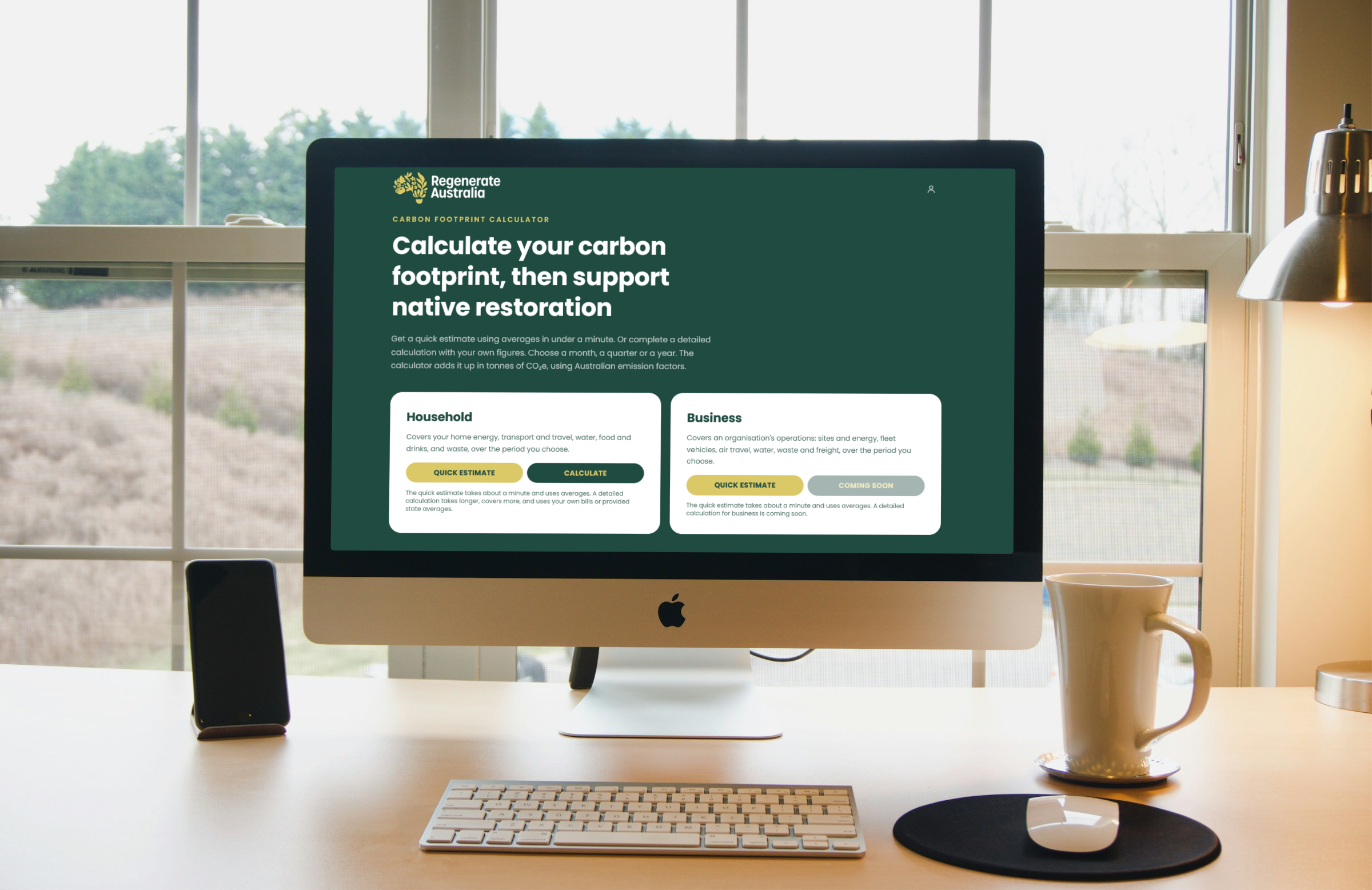
Our rebuilt carbon footprint calculator gives you a quick estimate in about a minute, or a more detailed picture if you have the time and figures to hand.
What’s new?
Our free calculator has been rebuilt with updated emissions factors and new features.
A new Quick Estimate household calulator lets you enter your state, household size, cars, diet and flights to get in figure in about a minute.
For a more accurate result, you can add your energy bills, travel, water use, waste and food and drink to get a detailed calculation in about 5 to 10 minutes. Use your own figures where you have them or select state or Australian averages.
Now you can:
· Enter one to four quarterly electricity, gas or water bills, or enter your total usage for the full year
· Include electric vehicles, with home charging counted in your electricity use.
· Compare your result with an average household in your state.
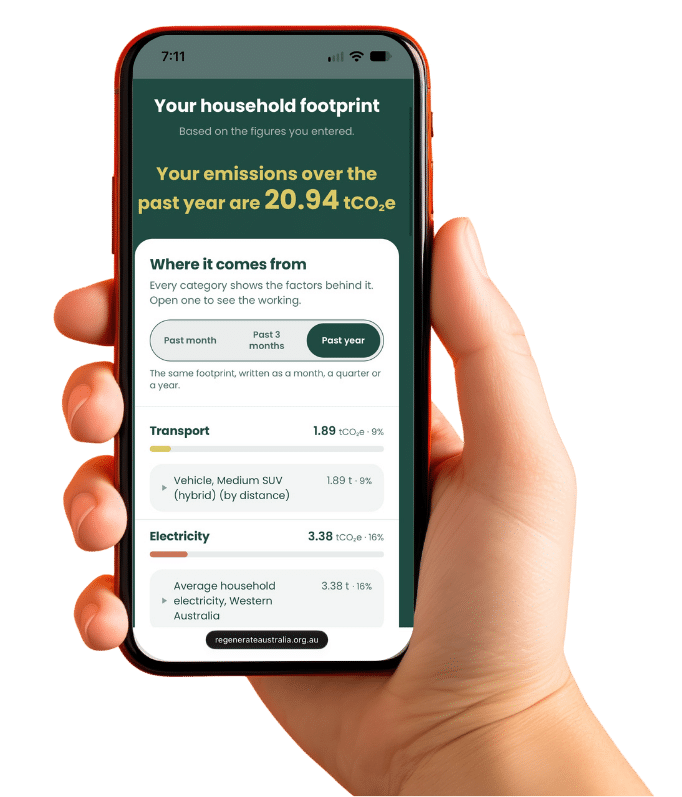
· See the figures used in your results and where they came from.
· View your footprint for the past month, three months or year.
· Create a free account to save a detailed calculation and compare it with a later one or use it as a starting point for a new calculation.
Businesses can also get a quick estimate based on staff numbers, large vehicles, domestic flights and AI tool use.
How we calculate your footprint
The calculator multiplies the figures you enter (such as your electricity use or fuel consumption) by an emissions factor, which estimates the greenhouse gases produced per unit. Results are shown in tonnes of carbon dioxide equivalent (t CO₂-e).
Most factors come from the Australian Government’s 2025 National Greenhouse Accounts Factors. However, electricity emissions vary by state. Once fuel production and delivery are included, the average is 0.69 kg CO₂-e per kilowatt-hour across Australia, compared with 0.87 in Victoria and 0.23 in Tasmania.
For areas not covered by the National Greenhouse Accounts, we use other published sources, including UK Government factors for flights, EPA Victoria factors for food and drink spending, and national waste data. Solar generation is shown for context but isn’t subtracted from your footprint. Always remember your result is an educational estimate, not an audited carbon account.
Where a typical footprint comes from
Using the calculator’s Australian averages, a typical household produces about 20.7 tonnes of CO₂-e a year. Food accounts for about 11.6 tonnes, home energy 5.4 tonnes, and driving 3.7 tonnes. Flights, waste and long-distance travel aren’t included in that average, so a detailed calculation that includes them will usually be higher.
What about AI?
One question we hear often is how much AI adds to a footprint.
A single text prompt uses a small amount of electricity, but estimates vary depending on what is counted. Google reported a median Gemini prompt used about 0.24 watt-hours; and OpenAI’s CEO has estimated an average ChatGPT query at about 0.34 watt-hours. Other estimates include a share of the data centre and hardware, which can produce higher figures.
As a guide, 100 text prompts a day for a year would use about 8.8 kilowatt-hours based on Google’s figure. That’s roughly 5.4 kg of CO₂-e on Australia’s average grid. Longer answers, image and video generation, and AI agents use more energy.
Our business quick estimate includes 0.1 tonnes of CO₂-e per staff member who uses AI tools. It’s based on published estimates and assumes a mix of everyday use and heavier use of AI agents. It covers electricity used to run AI requests, not model training or hardware manufacturing. The household calculator doesn’t include AI.
The wider impact is also growing. The International Energy Agency reports that data centre electricity use rose 17% in 2025 and expects it to double by 2030. In Australia, AEMO estimates data centres use about 2% of electricity on the east coast today, rising to around 6% by 2030.
What can you do next?
• Start with your biggest category. Your results show where most of your footprint comes from, and that’s usually the best place to begin.
• Energy at home. Use less grid electricity or choose renewable power. Heating, cooling and hot water are big users in most homes.
• Getting around. Drive less, or choose a more efficient car, and fly less where you can.
• Food. Eat less red meat, plan meals and use up leftovers to reduce waste.
• AI. Use a smaller, faster model for simple tasks, ask for shorter answers, and save image and video generation for when you need it.
Know your number.
Then grow something.
See your household footprint in about a minute, and exactly where it comes from. Then match it, once, monthly or yearly.