Every native plant we put in the ground starts as a seed, and where that seed comes from matters more than most people realise.
In October, Marie from Wildseed Natives and Olivia from our team spent three days at Hi-Vallee in Western Australia on Yued Noongar Country, collecting seed from the property’s remnant native vegetation. It was the first of several monthly trips planned through this season. Some of the seed will go to a nursery to be grown into seedlings, and some will be sown directly into the ground in next year’s planting area.
Why local seed?
The plants growing in Hi-Vallee’s remnant Kwongan heath have spent generations adapting to its soils, rainfall and climate. Seed collected from them carries that adaptation with it, so seedlings grown from it are naturally equipped to survive and grow on the same ground.
Collecting from as many species as possible matters too. A diverse mix of plants makes a more resilient ecosystem: one that supports more local wildlife and is better able to withstand drought, pests and disease.
Getting to know the Kwongan
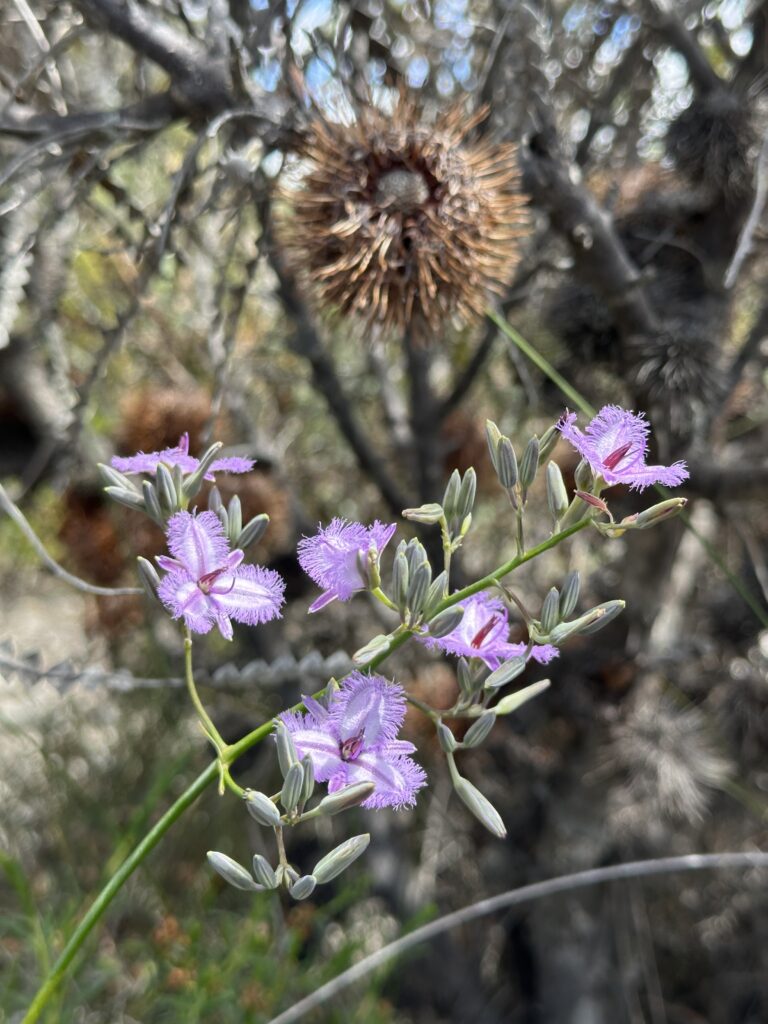
Kwongan (also spelt kwongkan) is a Noongar word for the sandplain heathlands of south-west Western Australia. They are among the most species-rich plant communities on Earth, and home to many species found nowhere else.
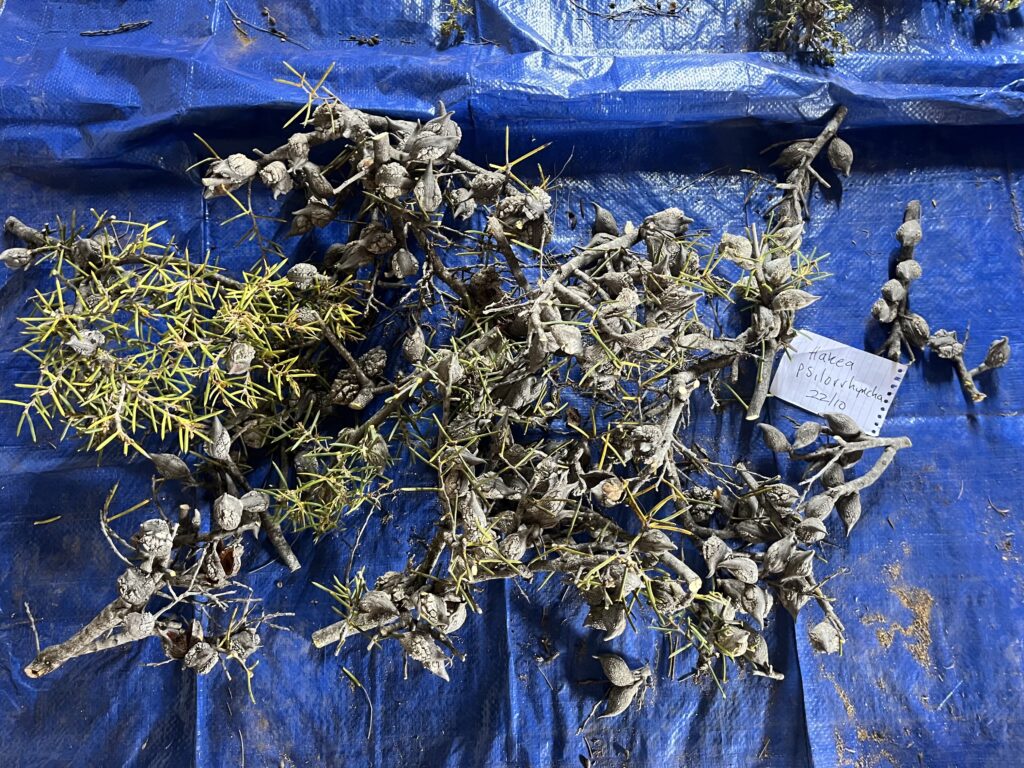
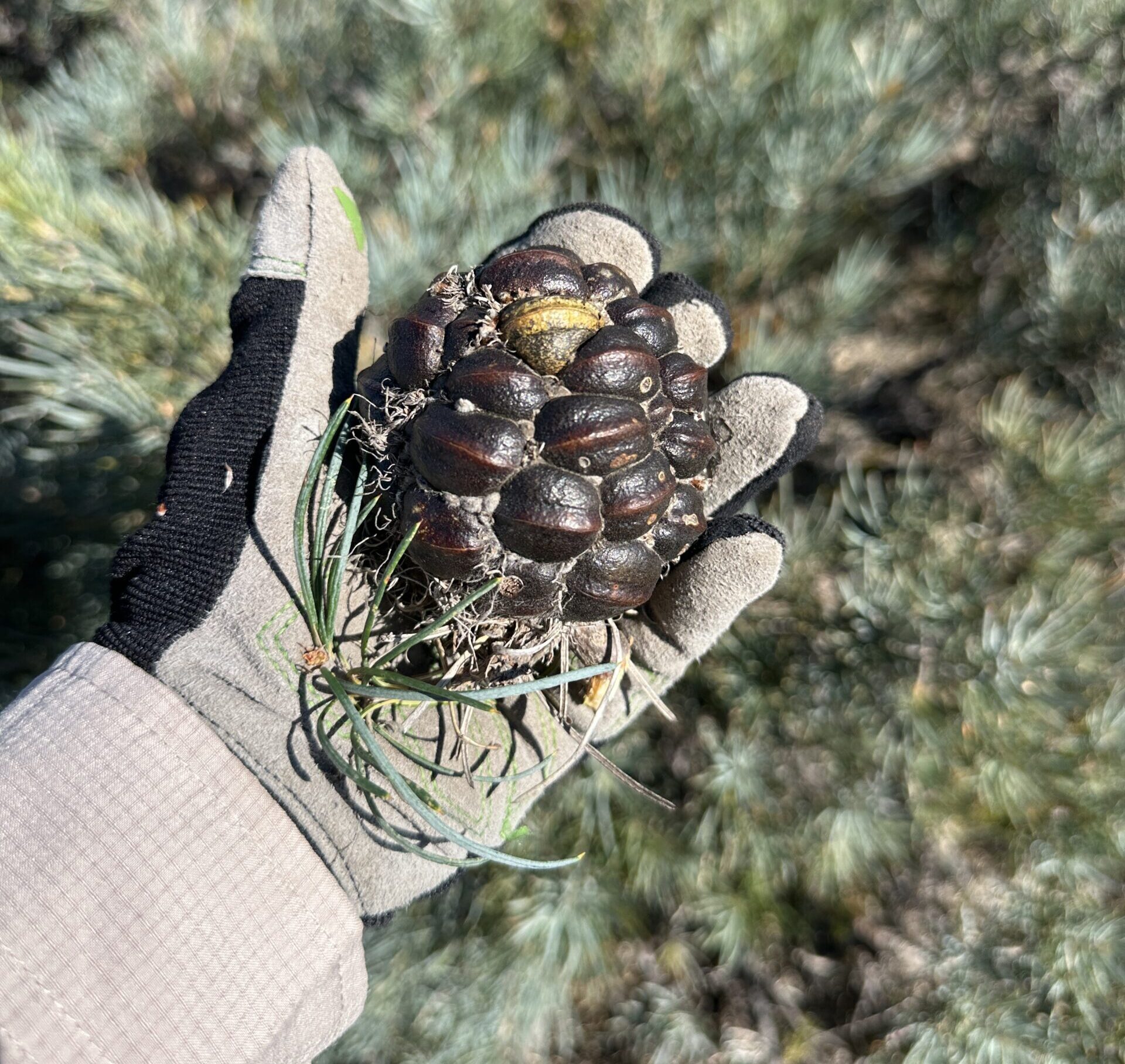
Because this was the first trip, a big part of it was getting to know the plants: learning to identify the species that grow naturally across the property. Plants recorded on the trip included banksias (Banksia grossa, B. incana and B. sphaerocarpa), hakeas, the woody pear (Xylomelum angustifolium), Eucalyptus todtiana, Calothamnus quadrifidus, Melaleuca violacea, verticordia and fringe lilies, and the team spotted yellow-throated miners feeding in the heath.
Timing is everything
Seed collecting is a matter of timing. Collect too early and the seed won’t be mature enough to grow. Too late and it has already dropped or blown away. The team checked each species to see whether its seed was ripe, then harvested what was ready by hand, gathering fruits and seed heads.
Just as importantly, they noted the species that weren’t ready yet. Those go on the list for the next trips, so the team can come back at the right time. Visiting every month through the season means we can collect each species when it’s ready, and build the most diverse seed mix possible for the planting.
What happens next
The collected seed and branches were placed in buckets or spread on tarps in the on-site shed. Over the coming weeks the shed warms up, the fruits dry out, and many of them release their seed on their own. When the team returns, they’ll finish processing the seed, send the nursery what needs to be grown into seedlings, and set the rest aside to sow directly into the 2027 planting area.
Grow something this Christmas
Seed collecting is one of the quiet, careful steps that turns cleared land back into habitat. This Christmas, you can give a gift that supports it: a gift to native restoration in someone’s name, with a Christmas e-card from you.